Supima vs Suvin vs Sea Island vs Egyptian Cotton
All four are extra-long staple (ELS) cottons, the small group of cottons with fibres of about 35 mm (1⅜ inches) or longer that spin into finer, smoother, stronger yarn than everyday cotton. Supima is American-grown and verified through a licensing programme; Suvin is a rare Indian cotton; Sea Island is grown in tiny quantities in the Caribbean; Egyptian is a broad origin label covering many grades. For an everyday T-shirt, the practical difference is how rare the fibre is, how easy the claim is to verify and what the garment costs.
The four cottons at a glance
| Cotton | Where it grows | How rare | How to verify the label |
|---|---|---|---|
| Supima | United States (mainly California, Arizona, New Mexico and Texas) | Under 1% of the world’s cotton | Licensed trademark: brands and mills are licensed to use the name |
| Suvin | Tamil Nadu, India | Very small harvests; mostly used for fine shirting yarn | Ask the brand for the mill and yarn details |
| Sea Island | West Indies (Barbados, Jamaica, Antigua and nearby islands) | Among the rarest cottons in the world | Certified through the West Indian Sea Island Cotton Association |
| Egyptian | Nile valley, Egypt (Giza varieties) | Widely sold; quality ranges from ELS to ordinary grades | Look for the Cotton Egypt Association logo; “Egyptian” alone is not a guarantee |
Why fibre length is the thing to compare
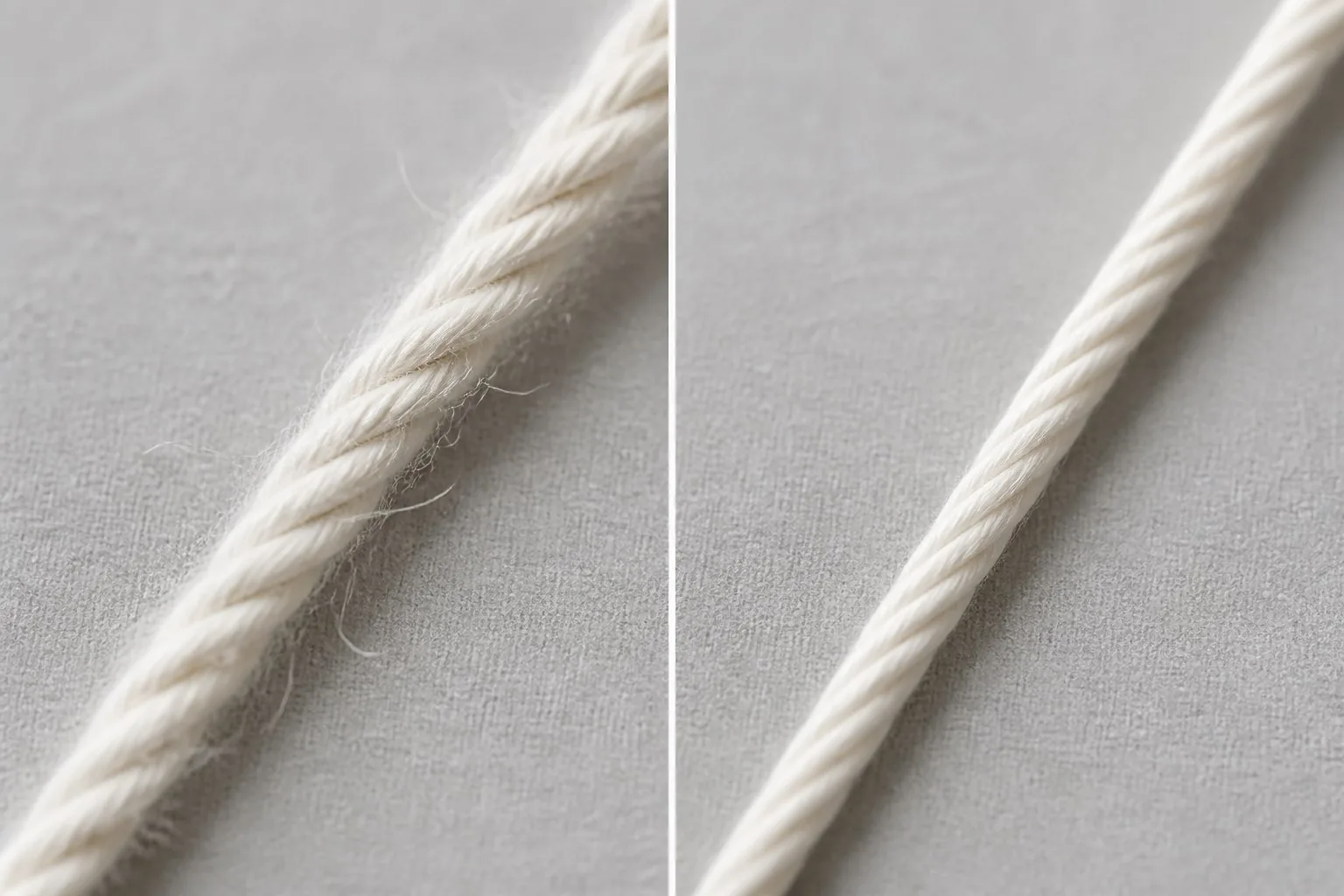
Most cotton grown in the world is upland cotton with shorter fibres. When short fibres are spun, more fibre ends stick out of the yarn, which is what makes an ordinary T-shirt look fuzzy or start pilling where it rubs.
Extra-long staple fibres give the spinner more length to twist together. The yarn can be finer and smoother with fewer loose ends, so the knitted fabric feels softer, takes colour more evenly and holds its surface for longer when it is cared for well. That is what all four of these cottons have in common.
Supima: American ELS cotton you can check
Supima is the trademark for 100% American-grown Pima cotton. Because the name is licensed, a brand cannot use it freely, which makes it one of the easier premium cotton claims to trust. The fibre is grown on a large enough scale to make everyday T-shirts and polos, not only luxury pieces.
Every ROKKX Supima crew and polo is 100% Supima cotton with no blend. You can see the full specification for each style, including fabric weight and finishing, on the ROKKX Supima page.
Suvin: India’s own rare cotton
Suvin is an Indian extra-long staple variety grown in small quantities in Tamil Nadu. It is prized by mills for very fine yarns, so you will mostly find it in premium dress shirting rather than in knitted T-shirts. Its rarity makes it a special-occasion fabric with a price to match.
Sea Island: the rarest of the four
Sea Island cotton is grown on a handful of Caribbean islands in very limited volumes. It is famous for its silky feel and is used by a small number of luxury makers, usually at many times the price of other premium cottons. Genuine Sea Island cotton is certified through the West Indian Sea Island Cotton Association.
Egyptian: check the grade, not just the word
Egypt grows some excellent extra-long staple varieties, sold under Giza numbers. But “Egyptian cotton” is an origin, not a grade: it can describe anything from fine ELS cotton to ordinary fibre, and the label has been misused in the past. If a garment says Egyptian cotton, look for the Cotton Egypt Association logo or ask which variety was used.
Which one makes sense for an everyday T-shirt?
For a T-shirt or polo you plan to wear every week, Supima is the practical choice among these cottons: it gives you the softness and smoothness of extra-long staple fibre, a claim you can verify, and a price that suits everyday wear. Suvin and Sea Island are wonderful fibres, but their rarity puts them in a different price bracket, usually in shirting.
Whatever cotton you choose, the fibre is only the start. Knit, fabric weight (GSM), finishing and care decide how the finished garment feels and lasts, so check those details on the product page too.
Questions to ask before you buy a premium cotton T-shirt
- Is it 100% of that cotton, or a blend that only contains some of it?
- Can the brand show how the cotton claim is verified?
- What is the knit (jersey, pique, drop-needle) and the fabric weight in GSM?
- Has the fabric been finished (for example mercerised or pre-shrunk)?
- What are the care instructions, and is there an exchange if the size is wrong?
Questions, answered
Is Supima better than Egyptian cotton?
Both can be extra-long staple cotton. The difference is verification: Supima is a licensed name for American-grown Pima cotton, while “Egyptian cotton” is an origin that can cover different grades. A verified Egyptian Giza cotton and Supima are both premium fibres; an unverified “Egyptian” label tells you much less.
Is Suvin cotton the same as Supima?
No. Suvin is an Indian extra-long staple variety grown in very small quantities, mostly spun into fine shirting yarn. Supima is American-grown Pima cotton sold under a licensed trademark and used widely for premium T-shirts and polos.
Why is Sea Island cotton so expensive?
It is grown in very small volumes on a few Caribbean islands, so supply is tiny compared with other premium cottons. That rarity, more than any single quality, drives the price.
Does ROKKX use Supima in every product?
ROKKX uses 100% Supima cotton in its crew T-shirts, full-sleeve T-shirts, pique polos and drop-needle polos. Its shirts and jeans use other fabrics, listed on each product page.